You can verify a legal car rental company in Dubai by checking its licensing, registration, documentation, insurance, and transparency before you hand over any money or documents.
This matters because illegal or semi-legal rental operators are common, especially online and on social media, and using them can lead to deposit loss, insurance denial, police issues, or fines charged directly to you.
Before booking, take a few minutes to confirm legitimacy so you can rent with confidence and avoid expensive problems later.
Below is a clear, step by step breakdown in detail of how to properly verify a car rental company in Dubai using official and practical checks.
Every legal car rental company in Dubai must hold a valid UAE trade license issued by the Department of Economy and Tourism.
The license must clearly state an activity such as “Car Rental,” “Rent a Car,” or “Vehicle Leasing.” A general trading license or tourism license is not enough. Ask the company for a copy of their trade license or search their business name on the Dubai DED public registry.
Check that the license is active, not expired, and issued in the same emirate where the company operates. If a company refuses to share its license or gives excuses, that is a major red flag.
Legal car rental companies must be registered with the Roads and Transport Authority.
RTA registration confirms that the company is authorized to rent vehicles, issue rental contracts, and operate insured rental fleets. This registration also links the company to traffic fines, Salik charges, and accident reporting systems.
You can ask directly if the company is RTA registered or request proof. Legitimate companies will not hesitate to confirm this because it protects both sides in case of fines or accidents.
A legal rental company must have a real, physical office address in Dubai.
This does not mean only a delivery location or WhatsApp contact. The office should be searchable on Google Maps, have business signage, and be accessible during working hours. Visiting the office is the safest way to verify legitimacy, especially for long-term or high-value rentals.
Companies operating only through Instagram, Telegram, or phone calls without a verifiable office are high risk.
The company name must match exactly across all documents.
The trade license name, website name, rental agreement header, invoice, and bank account should all reflect the same legal entity. Differences such as shortened names, personal names, or unrelated business titles often indicate an unlicensed operation using a borrowed or expired license.
If payments are requested to a personal bank account or under a different company name, do not proceed.
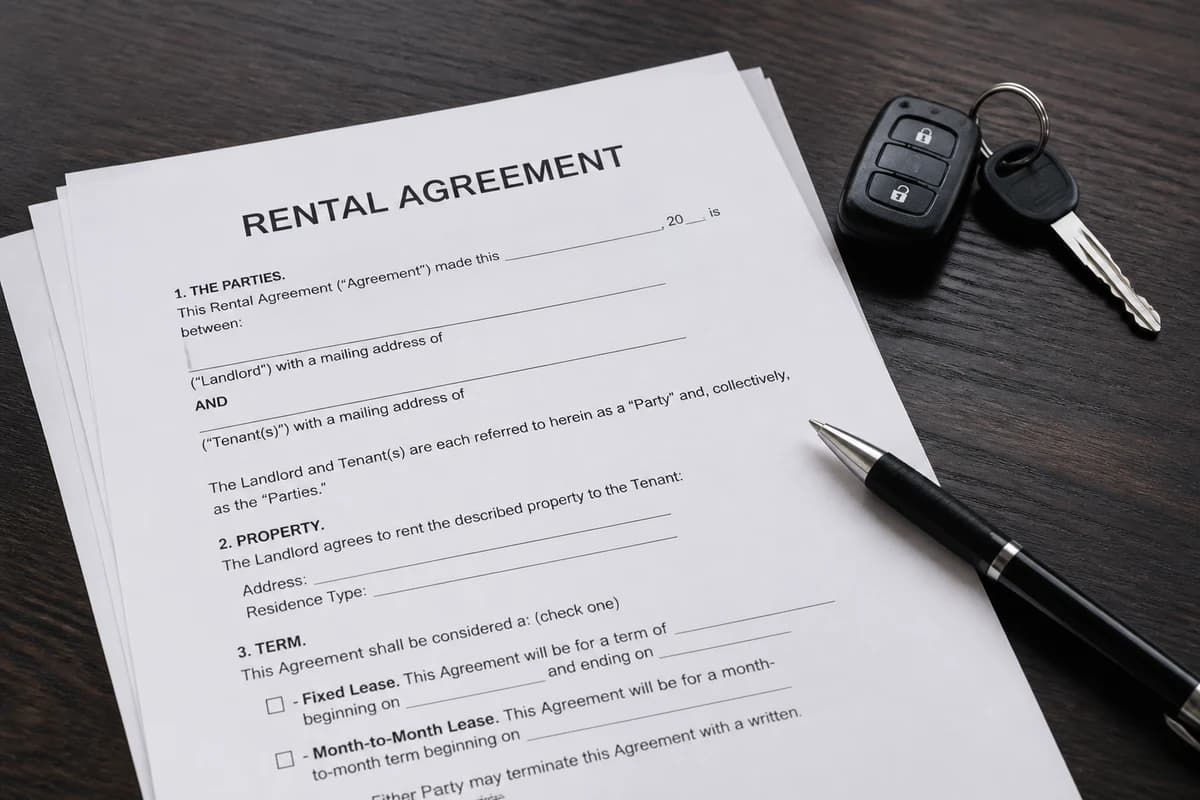
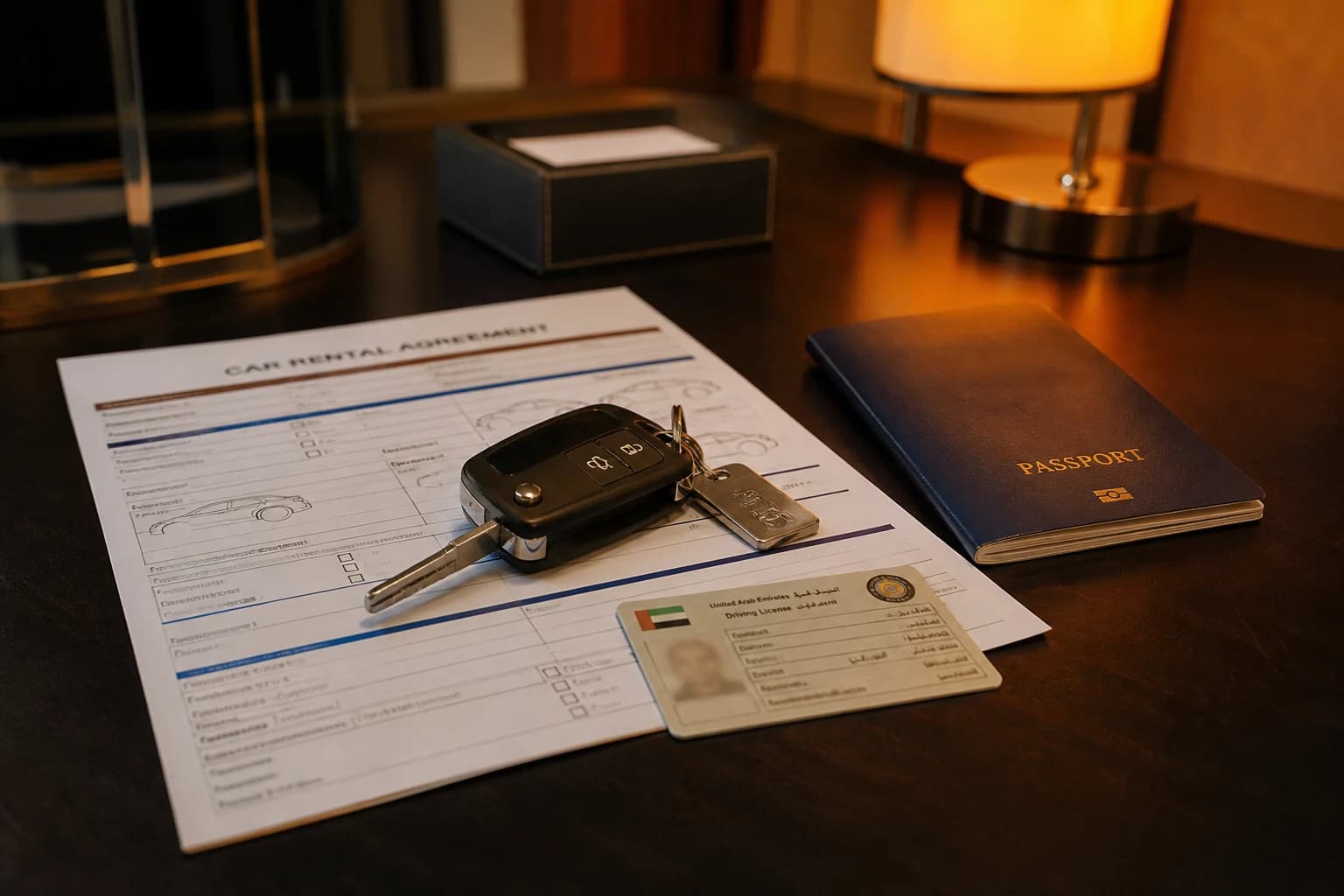
A legal rental company always provides a written rental agreement.
The contract should include vehicle details, plate number, rental period, daily or monthly rate, mileage limits, fuel policy, insurance coverage, deposit amount, fine handling, and return conditions. It must include the company’s legal name, license number, office address, and contact details.
Verbal agreements or WhatsApp confirmations without a signed contract offer no legal protection.
Every rental car in Dubai must have valid insurance.
At minimum, the vehicle must be covered by third-party liability insurance. Most legal companies also offer comprehensive coverage with optional excess reduction. Ask to see the insurance copy and confirm it is valid for rental use, not personal use.
If an accident occurs and the car is uninsured or incorrectly insured, you may be personally liable for all damages.
Rental vehicles are registered differently from private cars.
The Mulkiya, which is the vehicle registration card, should show that the owner is a rental or leasing company, not an individual. If the car is registered under a personal name, it is not legally allowed to be rented out.
Always ask to see the Mulkiya before taking the car, especially for long-term rentals.
Legal car rental companies in Dubai must issue VAT compliant invoices.
The invoice should include the company’s legal name, trade license number, VAT registration number, rental amount, VAT amount, and total payable. If VAT is charged but no VAT number is provided, this indicates non-compliance.
Invoices protect you in case of disputes, deposit claims, or corporate reimbursements.
A legitimate rental company usually has an established online presence.
Check Google reviews, not just the rating but the content. Look for consistent feedback about deposits, refunds, car condition, and customer service. A few negative reviews are normal, but repeated complaints about withheld deposits or fake charges are warning signs.
Also check whether the company has a professional website, working phone numbers, and consistent branding.
Legal rental companies are transparent about deposits.
They clearly state the deposit amount, usually held by credit card, and the refund timeline, which is commonly 21 to 30 days after return due to traffic fine processing. This timeline should be written in the contract.
Be cautious of companies that demand cash deposits, refuse to specify refund timelines, or promise “instant refunds” without documentation.
Verifying a legal car rental company in Dubai is essential to avoid fines, insurance problems, and financial loss. A legitimate company will have a valid trade license, RTA registration, physical office, proper contracts, insured vehicles, VAT invoices, and transparent deposit policies.
If any of these elements are missing or unclear, do not proceed, no matter how attractive the price seems. In Dubai’s rental market, legality and transparency are far more important than discounts.