.svg)
.svg)





.webp)





.webp)


.webp)


.webp)


.webp)
.webp)


No results found for your search
View all car rentals
Driving a rental car from Dubai to Qatar is an option for travelers seeking flexibility and independence, but it is far more complicated than a simple inter-emirate drive.
nlike Oman, which shares a direct border with the UAE, Qatar is separated by Saudi Arabia, which requires travelers to comply with Saudi transit rules, visa regulations, and insurance requirements.
This makes the journey a multi-country road trip that demands careful planning, preparation of documentation, and coordination with the rental company.
For travelers who plan to stay in Qatar for several days, wish to explore the route, or need a vehicle for personal or business purposes, driving can be an attractive option, but only if all requirements are properly met.
In this guide, we will explore the entire process of renting a car from Dubai to Qatar, including necessary documents, insurance considerations, Saudi transit rules, Qatari entry requirements, route planning, cost analysis, travel tips, and frequently asked questions, providing travelers with a comprehensive understanding of what to expect and how to prepare.
Yes, it is possible to rent a car in Dubai and drive it to Qatar, but this opportunity is limited to certain rental companies and specific vehicle types.
Most economy and app-based rental cars are not approved for cross-border travel, primarily because insurance and legal restrictions prevent them from being driven into Saudi Arabia or Qatar.
Premium rental agencies, international providers, and selected UAE-based car hire companies may allow cross-border travel, but only if the traveler obtains prior written approval and an official No Objection Certificate (NOC) from the rental company.
Traveling by road from Dubai to Qatar requires passing through three countries: the United Arab Emirates, Saudi Arabia, and Qatar. Each country enforces specific entry requirements, document verification procedures, and vehicle regulations.
The first leg, within the UAE, is relatively simple, with standard exit procedures at the border. The second leg, through Saudi Arabia, is the most complex.
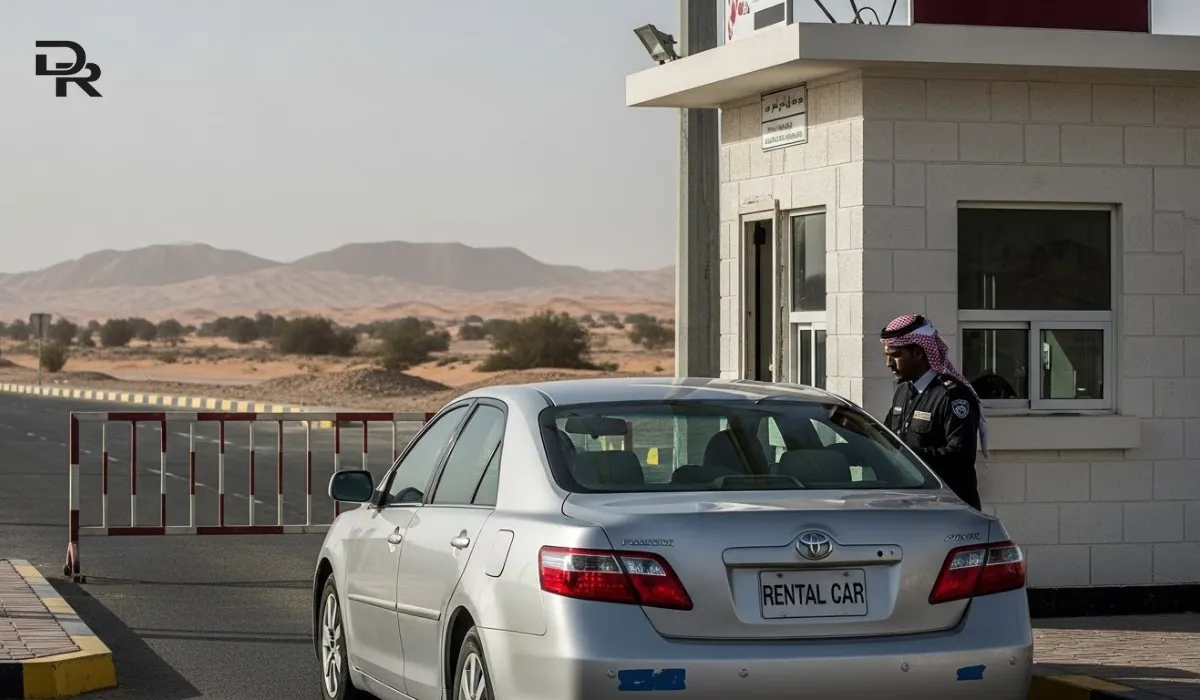
Saudi authorities enforce strict transit rules, including mandatory visas, vehicle insurance coverage, and potential inspection of the car and rental documents.
Even if you do not plan to stay overnight in Saudi Arabia, you are legally required to meet all transit requirements. Any noncompliance at the Saudi border will prevent travelers from continuing to Qatar.
Finally, entry into Qatar is only allowed through the Salwa border, which connects the Kingdom of Saudi Arabia to Qatar. Qatari authorities require proof of a valid visa, vehicle insurance covering Qatar, and proper documentation from the rental company. Travelers who fail to meet these requirements can be refused entry, fined, or turned back at the border.
Proper documentation is crucial for a smooth journey. Travelers must carry all necessary documents for themselves and the vehicle. Missing or incorrect documents can lead to significant delays, denial of entry, or even legal complications.
Drivers must carry a passport with at least six months’ validity from the travel date, as both UAE exit officials and Qatari border authorities will check the document.
UAE residents should also carry a valid Emirates ID. Tourists may require a Saudi transit visa, which can often be obtained online, or pre-approval depending on nationality.
In many cases, travelers may qualify for visa-on-arrival in Qatar, but road entry rules can differ from airport entry rules, so pre-checking online is essential.
A valid driving license is also mandatory for the journey. UAE licenses are generally accepted in both Saudi Arabia and Qatar. However, if your driving license is in a language other than English or Arabic, an International Driving Permit (IDP) is highly recommended, as it provides clarity and prevents misunderstandings at border checkpoints.
Vehicle documentation is equally critical. Travelers must ensure the following are in order:
All documents must match precisely. Inconsistencies between the NOC, registration, rental agreement, and insurance can result in delays or refusal at borders. Travelers should carry both physical and digital copies to ensure compliance.
Saudi Arabia is the most critical segment of the journey due to its strict transit regulations. Travelers must have a valid Saudi visa, which is obtainable online for many nationalities. Even short-term transit requires compliance, and failure to meet these rules can prevent entry or delay the trip significantly.
Vehicle insurance must specifically cover Saudi Arabia. UAE insurance alone does not suffice. Some rental companies provide GCC coverage that includes Saudi Arabia, but this must be verified in writing.
Random inspections at the Saudi border are common, including verification of the NOC, rental agreement, vehicle registration, and driver credentials.
Travelers should also be aware of Saudi traffic regulations, which are strictly enforced, including speed limits, seat belt rules, and mobile phone restrictions.
Entry into Qatar is conducted at the Salwa border. Officials inspect passports, visas, vehicle registration, and insurance.
Qatar requires that vehicles entering the country have insurance coverage valid in Qatar. Without approved coverage, travelers will not be allowed entry.
Some rental companies offer Qatar-specific insurance as an add-on. Pre-arranged coverage is strongly recommended over attempting to purchase insurance at the border, as availability may be limited and processing can be time-consuming.
Visa requirements depend on nationality. Travelers eligible for visa-on-arrival at airports may still need pre-approval for road entry. Qatari authorities may also inspect the vehicle to ensure compliance with local traffic regulations and confirm that the rental agreement permits cross-border travel.
Cross-border insurance is one of the most important factors for this journey. UAE rental insurance generally does not cover Saudi Arabia or Qatar, making separate arrangements essential.
At a minimum, travelers must have third-party liability insurance valid in both countries. Comprehensive coverage, including collision and theft, is optional but recommended, especially for high-value or luxury vehicles.
Rental companies may provide this coverage as part of a cross-border package. Some travelers may need to purchase temporary insurance at the Saudi or Qatari border, but this is not guaranteed for all vehicles. Written confirmation from the rental company is critical to avoid legal and financial complications.
The journey from Dubai to Qatar is approximately 1,500 km and follows well-maintained highways but requires careful planning due to the long distance and international borders.
From Dubai, travelers typically use Sheikh Mohammed Bin Zayed Road or Emirates Road toward Abu Dhabi, then continue to the Al Ghuwaifat border, the main UAE–Saudi checkpoint for long-distance road travel. This segment usually takes 6–7 hours, depending on traffic conditions and rest stops.
Once inside Saudi Arabia, travelers drive along major highways through the Eastern Province, passing cities such as Hofuf and Dammam, before proceeding south to the Salwa border crossing into Qatar.
This segment takes around 5–6 hours under normal traffic conditions. Fuel stations and rest areas are available but can be spaced far apart in remote stretches, so planning fuel stops is essential.
The total driving time from Dubai to Qatar is approximately 12–14 hours, excluding border formalities. Realistically, travelers should plan for a full day or more, considering the following:
For safety and comfort, travelers unfamiliar with long-distance desert driving are advised to schedule an overnight stop in Saudi Arabia.
Driving from Dubai to Qatar generally costs more than flying, particularly for solo travelers. Costs include the following:
Although more expensive, driving offers the flexibility to explore along the route, carry more luggage, and travel at one’s own pace, which can be particularly valuable for families or long-term visitors.
Travelers should confirm rental company approval for cross-border travel at least one week in advance, carry both physical and digital copies of all required documents, and plan fuel and rest stops carefully.
Maintaining a full tank in remote stretches, adhering strictly to traffic regulations, avoiding night driving in unfamiliar desert areas, and monitoring border operating hours will make the journey safer and more predictable.
Travelers should also carry emergency contact numbers for the rental company and know the locations of fuel stations along the Saudi route.
Yes, tourists can drive from Dubai to Qatar if they meet Saudi Arabia and Qatar entry requirements and have a rental car approved for cross-border travel. Travelers must carry all necessary documents, including passport, visa, NOC, vehicle registration, and insurance proof. Pre-planning is essential because border authorities strictly enforce compliance, and any missing paperwork can result in delays or denial of entry.
Flying is usually faster, simpler, and more economical, especially for solo travelers. Renting a car and driving is more suitable for families, groups, or travelers needing a vehicle in Qatar for multiple days. Costs can quickly add up due to cross-border rental fees, insurance, visas, fuel, and potential accommodation, but the added flexibility and convenience can justify the expense for longer stays.
Most leased vehicles cannot leave the UAE due to contractual restrictions. Even if technically feasible, leasing companies rarely issue the required NOC for travel through Saudi Arabia and into Qatar. Attempting this without permission can result in fines, impoundment, or legal consequences.
Yes, valid entry permission is required for Saudi Arabia and Qatar. Transit does not exempt travelers from Saudi visa requirements, and Qatar may require pre-approval even if the traveler qualifies for visa-on-arrival at airports. Travelers must ensure their visas cover the entire duration of travel, including any transit through Saudi Arabia.
Highways in Saudi Arabia are well-maintained and generally safe, but night driving carries additional risks. Long distances, fatigue, limited lighting in remote areas, and potential wildlife near rural roads can make travel hazardous. Overnight driving should be avoided for inexperienced drivers, and rest stops should be planned strategically.
Renting a car from Dubai to Qatar is feasible but complex. Travelers must coordinate with their rental company, ensure valid cross-border insurance, obtain necessary visas, and carry all documentation in order.
The journey involves UAE exit formalities, Saudi Arabia transit regulations, and Qatari entry requirements, all of which must be followed closely to avoid legal complications or delays.
For those prioritizing independence, the ability to explore the route, and the flexibility of having a vehicle in Qatar, this road trip can be an enriching experience.
However, for short visits or travelers who prefer simplicity, flying is generally faster, more economical, and less stressful. With careful preparation, attention to documentation, and compliance with traffic laws, a road trip from Dubai to Qatar can be smooth, safe, and highly rewarding.
Also Read: Your Guide To Rent a Car From Dubai To Oman
.svg)